In this article
Key takeaways
- The first signal is running time: only 277 of 28,256 Kuwait ads had run 30 days or more when we captured them; that minority is what you study.
- The second is many pages on one product: 5,027 advertiser pages in Kuwait, with hundreds per category; three pages on the same product is real demand, dozens is a crowded market.
- The third is video: 69% of Kuwait's ads are video, and a product whose video returns in new versions is being scaled by a merchant who sees results.
- The method sees neither sales nor margin; it sees advertiser behaviour. Test with a small batch before any stock.
The three signals that reveal a winner in Kuwait
No ad library shows a store's sales, but the advertiser's behaviour reveals what sells. Three signals can be measured from public ads:
- An ad running for 30 days or more. An advertiser does not keep paying for a month on a product that does not sell. In our study of Kuwait's ads (2026-10-25 to 2026-11-06), of 28,256 ads whose start date we know, only 277 had run that long. The rarity is what makes the signal strong.
- Many pages on the same product. 5,027 pages advertised in Kuwait in a few days, among them 564 in electronics and 486 in hair care. When three or more stores sell the same product with similar ads, demand exists; when you find dozens, the window has usually closed.
- Video and its versions. 69% of Kuwait's ads are video. A product whose video appears in three or more versions from the same advertiser is one its owner is scaling after seeing results.
How to read running time in general, and how many days are enough: Ad running time. The general guide to winning products in the Gulf: Winning products.
Where ads last in Kuwait
The ads that had run 30 days or more are not spread the way all ads are. Fashion (3,498 ads) and electronics (3,326) are advertised most, but the lasting ads are more numerous in food and coffee (31 of 1,806), hair care (28 of 2,824), perfumes (27 of 2,208) and kids (27 of 1,914), against 19 in fashion and 16 in electronics.
The lesson: repeat-purchase products (hair oil, coffee, perfume) keep their ad longer than fashion items. If you want a product that lives for months rather than weeks, start from these categories. The category list with prices in dinars is in Best sellers in Kuwait.
A ten-minute routine in GccFY, every week
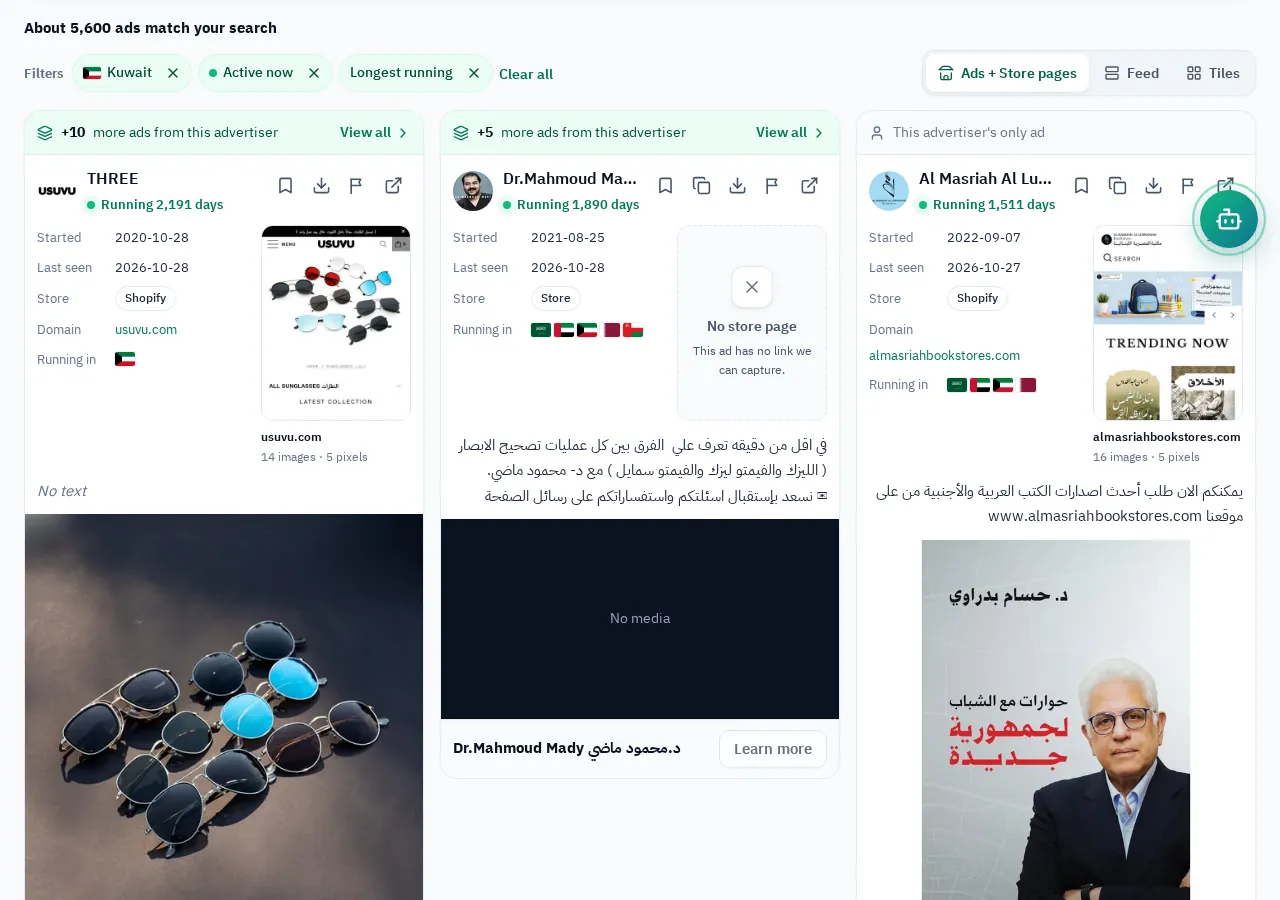
- Minute 1: open the library with three filters: country Kuwait, status active, sort longest running. That screen alone shows the ads that lasted longest in Kuwait first.
- Minutes 2 to 4: go through the first twenty ads and note the products you see more than once from different pages.
- Minutes 5 to 7: for every repeated product, open the store page snapshot behind the ad: the price in dinars, the offer, cash on delivery or not, and the store platform.
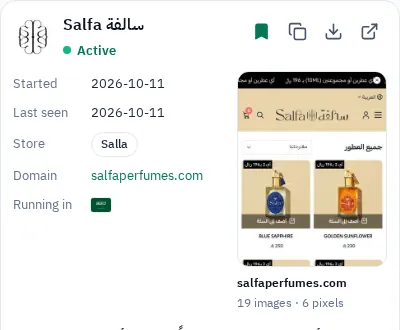
- Minutes 8 and 9: open the advertiser window: how many active ads do they run for the product? When did the oldest start? Did new versions appear this week?
- Minute 10: save the candidates in a "Kuwait, this week" collection with a note, and come back next week: still running? More versions? A new store on it?
After two weeks you hold a short list: products past 30 days, sold by three or more pages, appearing in new video versions. Those are the candidates, not the ad you saw once.
How to read what you found
| What you see | What it usually means | What to do |
|---|---|---|
| One ad running for 40 days from one page | A product that sells for this store, possibly thanks to its brand or audience | Look for other pages selling it before deciding |
| Three pages selling the same product, their ads two weeks old or more | Real demand and likely competition | Open the store pages and compare price and offer; enter with a different offer |
| Dozens of new ads on the same product this week | A wave; the market is filling and prices will drop | Avoid it, or enter fast with a very small batch |
| One video in three or more versions from the same advertiser | The merchant is scaling a winner | Study the video's angle and the offer, never the material itself |
| An ad labelled "Low impression count" in Meta's library, one day old | Nothing proven yet | Ignore it this week |
The buttons say how the competitor sells: "Shop now" on 42% of Kuwait's ads, "WhatsApp message" on 22%, "Order now" on 17%.
The limits of the method, honestly
- It sees neither sales nor margin. An ad running for a month may sell at a loss for a merchant building a brand. Work out your own margin: price minus cost, delivery, ads and refused orders.
- Running time at capture. The study's numbers say how many ads had run 30 days when we captured them, not how long they lived afterwards. A fresh ad has not been judged yet.
- Categories by words. We match an ad to a category by the words in its text, and an ad can fall in two.
- Kuwait is a small market. Only 2,295 ads stated a price in dinars; a winner there may not win in Saudi Arabia, and the reverse. Compare with the UAE in Winners in the UAE.
- The season. A product lasting in November may be a White Friday product; check Gulf ad seasons before you buy.
For Kuwait's overall market and its Instagram ads read Trending in Kuwait and Instagram ads in Kuwait.