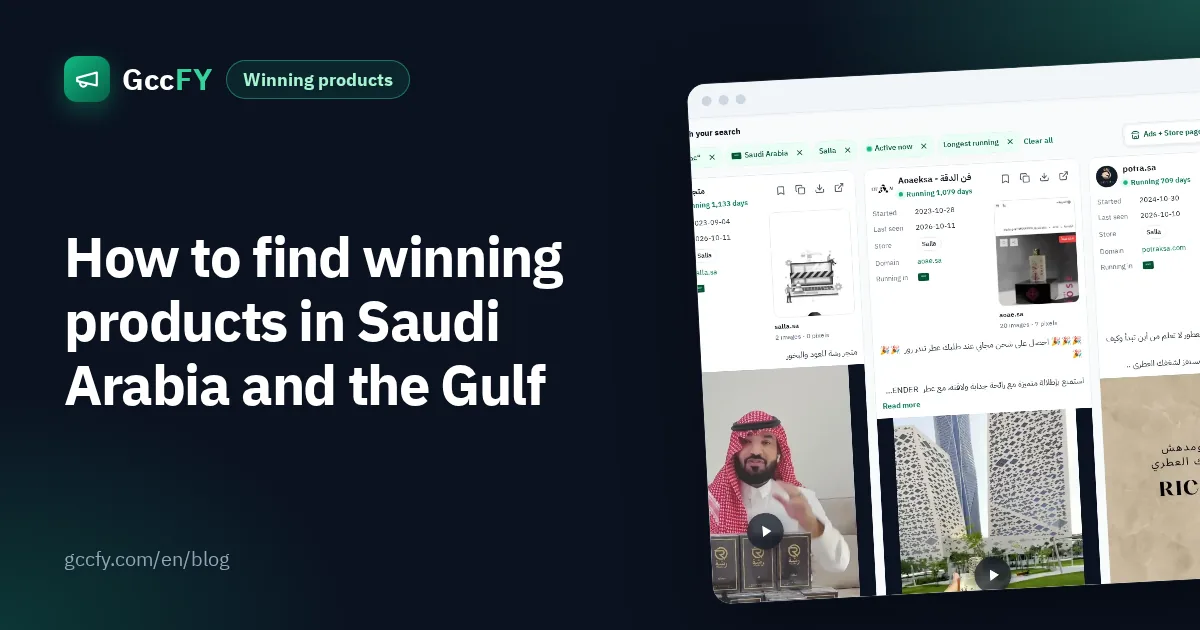
In this article
Key takeaways
- The strongest sign: an ad that has run for weeks. Most ads stop within days (74% of the stopped Arabic ads in our sample did not last a week).
- A product advertised by three or more stores with similar ads means the demand is real.
- Check the margin first: selling price minus product, delivery, ad cost and refused cash-on-delivery orders.
- Start researching four to six weeks before a season: Ramadan, Eid, national days and White Friday.
What is a winning product?
A winning product is not simply the most popular one. It is a product that sells at a steady profit: demand is clear, the margin covers advertising, delivery and returns, and you can present it with an offer that sets you apart. A product that trends for a week and disappears is not a winner, and a product that sells a lot with no margin does not build a store.
The Gulf adds local conditions: will buyers pay upfront or insist on cash on delivery? Does the product need registration with an authority? Can it arrive within a few days?
The signs of a winning product in ads
- An ad running for weeks: advertisers do not keep paying for a product that does not sell. Look for ads active for 14 or 30 days.
- Several advertisers for the same product: when three or more stores sell the same item with similar ads, demand exists.
- Many versions of one ad: an advertiser duplicating an ad with new copy and images is scaling a winner.
- New stores on the product: a store a few weeks old advertising one product heavily usually entered because it saw others succeed.
- Seasonal comebacks: a product whose ads return before Ramadan or Eid every year has dependable seasonal demand.
These numbers come from a random sample of Arabic ads that have stopped: an ad that passes 30 days is the exception, which is why it is worth studying. More in Ad running time.
Step by step: finding a winner in GccFY
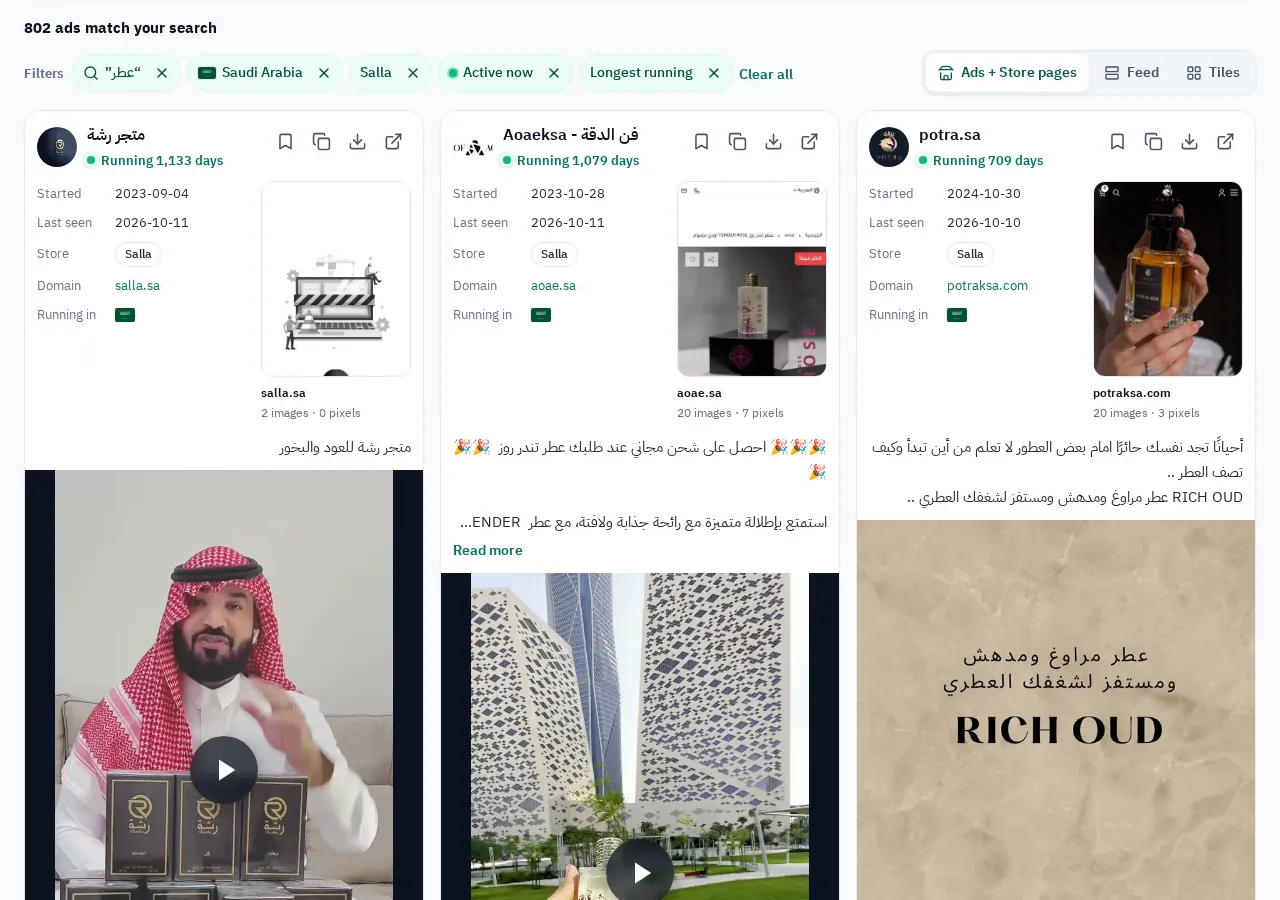
- Choose the country you sell in (Saudi Arabia, for example) and "active now".
- Sort by "longest running" to see the ads that survived longest first.
- Narrow by category: type a product keyword, or start from the category pages: perfumes, skincare, home and kitchen, kids and toys.
- Open the store page behind each ad: price, offer, payment and delivery.
- Open the advertiser window: how many active ads do they run for this product, and when did the latest start?
- Save the candidates in one collection and compare them a week later.
What is advertised most in the Gulf right now?
These categories come from the newest Arabic ads in our library and update with every rebuild of the site. A big category means big demand and big competition at the same time; look inside it for a specific product with a different offer.
For the numbers by country and store platform, read Best sellers in Saudi Arabia and the Gulf ads report.
Check the margin before you buy
A product that sells a lot can still lose money if you skip a cost. A rough example for a product sold in Saudi Arabia with cash on delivery:
| Item | Per order |
|---|---|
| Selling price | SAR 149 |
| Product cost | SAR 35 |
| Delivery and collection fees | SAR 30 |
| Ad cost per order | SAR 45 |
| Refused cash-on-delivery orders (10%) | about SAR 10 |
| Approximate profit | about SAR 29 |
Use your own numbers. The rule of thumb: if no clear profit is left after ad cost, the product needs a higher price, a bundle offer (two for a special price) or a cheaper supplier. VAT (15% in Saudi Arabia) is part of the calculation if you are registered.
The selling seasons of the Gulf
| Season | What gets advertised most |
|---|---|
| Before and during Ramadan | Dates, coffee and hosting, abayas and jalabiyas, perfumes and bakhoor, home refresh. |
| Eid al-Fitr and Eid al-Adha | Clothing, gifts, perfumes, accessories and sweets. |
| Founding Day (22 February) and Saudi National Day (23 September) | Broad offers in every category, green-themed products. |
| Back to school | Kids' supplies, bags and electronics. |
| White Friday (November) | Electronics, perfumes and beauty with deep discounts. |
Start four to six weeks before a season: the first ads appear early, and early starters test before ad costs rise. Details in Gulf ad seasons.
Evaluate the product before selling it
- Cash on delivery: common in the Gulf, but refused deliveries eat profit; count them.
- Shipping: light, unbreakable products are easier and cheaper; liquids and bulky items need careful numbers.
- Regulations: cosmetics, supplements and food often need registration with the relevant authority in each country; check before buying stock.
- Differentiation: if dozens of advertisers sell the same item at the same price, what makes your offer better?
- Content: can you film a real video of the product in use? Video makes up 65% of the newest ads in our library.
Beginner mistakes
- Chasing a product that is over: when dozens of advertisers crowd in and prices drop, the window has usually closed.
- Trusting one ad: one store's winning ad may be about its brand or audience, not the product.
- Ignoring the season: a Ramadan bestseller in March will not sell the same way in June.
- Buying big before testing: test with a small batch or pre-orders first.