In this article
Key takeaways
- LightFunnels stores are few and their ads many: 3,711 ads from 142 pages, so following one advertiser reveals dozens of products and angles.
- The free methods: Meta's Ad Library for a page's active ads, Wappalyzer or BuiltWith to reveal the platform, sitemap.xml for the page list on many stores, Meta Pixel Helper for the pixel.
- In GccFY: the "store type: LightFunnels" filter sorted by longest running, the landing page captured behind every ad, and the Domains screen with each store's ads per country.
- No tool sees a store's sales, orders or profit. The honest signals: an ad running for weeks, a wave of new ads for one product, a store expanding to more countries.
Why spying on LightFunnels differs from any other store
A Salla or Shopify store has a catalogue, collections and dozens of products. A LightFunnels page is usually one product: a video, before-and-after pictures, benefits, then a short order form. The advertiser builds a page for each product it tests, fires many ads at it from different angles, and cuts the losers fast.
The numbers agree: 82% of LightFunnels ads are video (against 69% of all ads), the "Order now" button is on 42%, and cash on delivery is mentioned in the copy of 21%. The biggest advertiser page on the platform ran 393 ads on its own in the same window.
The practical consequence: do not look for a "store" to browse, look for an advertiser whose pages you follow one by one, and a product whose advertisers you follow. For the whole market, read The GCC dropshipping market.
The free methods: what you can see yourself
- From the ad to the page: in Meta's Ad Library pick the country and "All ads", type the competitor's page name and pick it from the list. You see its active ads, the start date of each and the link it leads to. The full library guide is in Facebook Ad Library.
- Identify the platform: open the landing page and run the Wappalyzer or BuiltWith browser extension, or search the page source for the platform's name. That tells you it is a LightFunnels page, not a regular store.
- The page list: many stores publish a /sitemap.xml file on their domain with their page URLs and sometimes dates. A new page for a new product means a new test. Some stores do not publish it or change it.
- The pixel: the Meta Pixel Helper extension shows the Meta pixel on the page. One pixel on several domains usually means one owner. Tracking tools by platform: Tracking pixels in Gulf stores.
The limits: Meta's library shows active ads only, commercial ads vanish once they stop, and it has no store-platform filter. You cannot tell which ads in Saudi Arabia lead to LightFunnels without opening them one at a time.
The LightFunnels filter in GccFY: every funnel on one screen
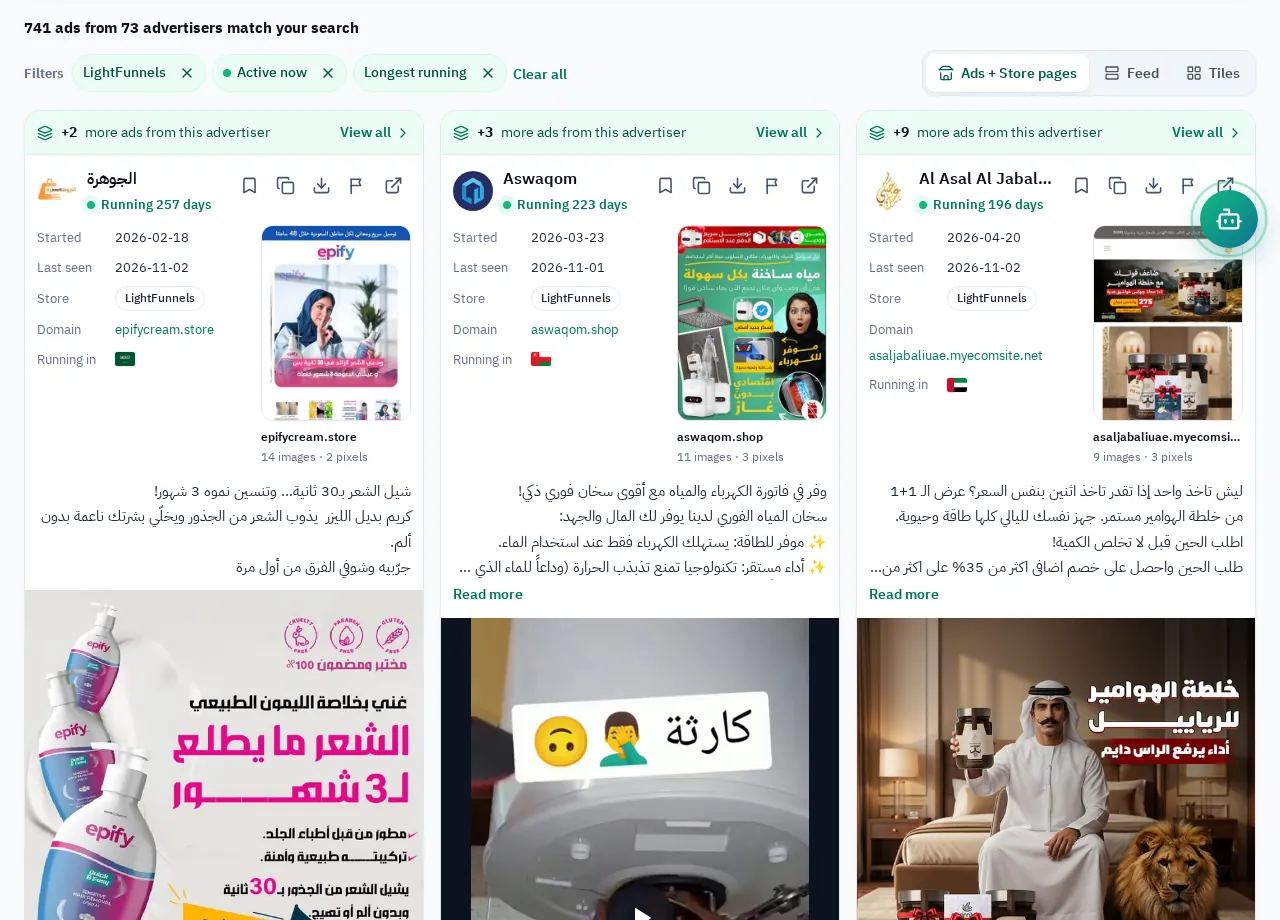
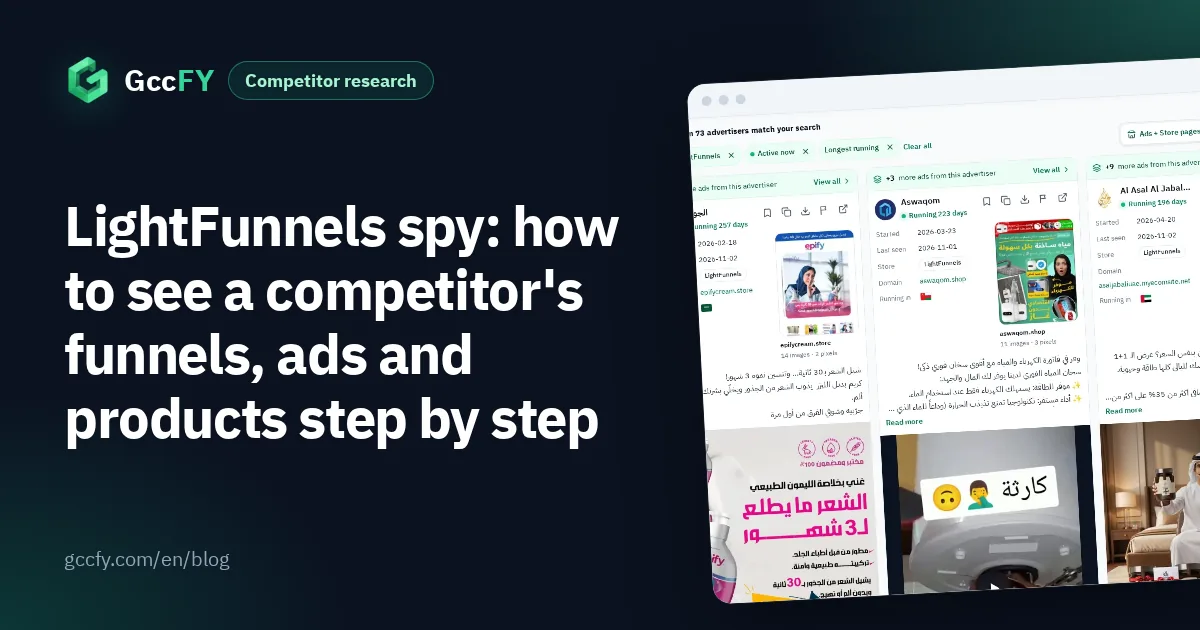
In the GccFY library pick "store type: LightFunnels" and only these funnels' ads remain. Then:
- Sort by longest running: an advertiser does not pay for weeks on a losing ad, so a surviving ad is the closest thing to a winning product you can see from outside. How to read running time: Ad running time.
- Add the country: LightFunnels ads usually target one country: of 1,804 ads in Saudi Arabia, only 3 also ran in the UAE. Each country gets its own funnel and its own currency.
- Search the product word: «شعر» (hair), «سيروم» (serum), «سماعات» (headphones), to see every funnel selling it.
- Save what matters in collections and come back weekly to see what stopped and what kept running.
Read the landing page, even after the ad stops
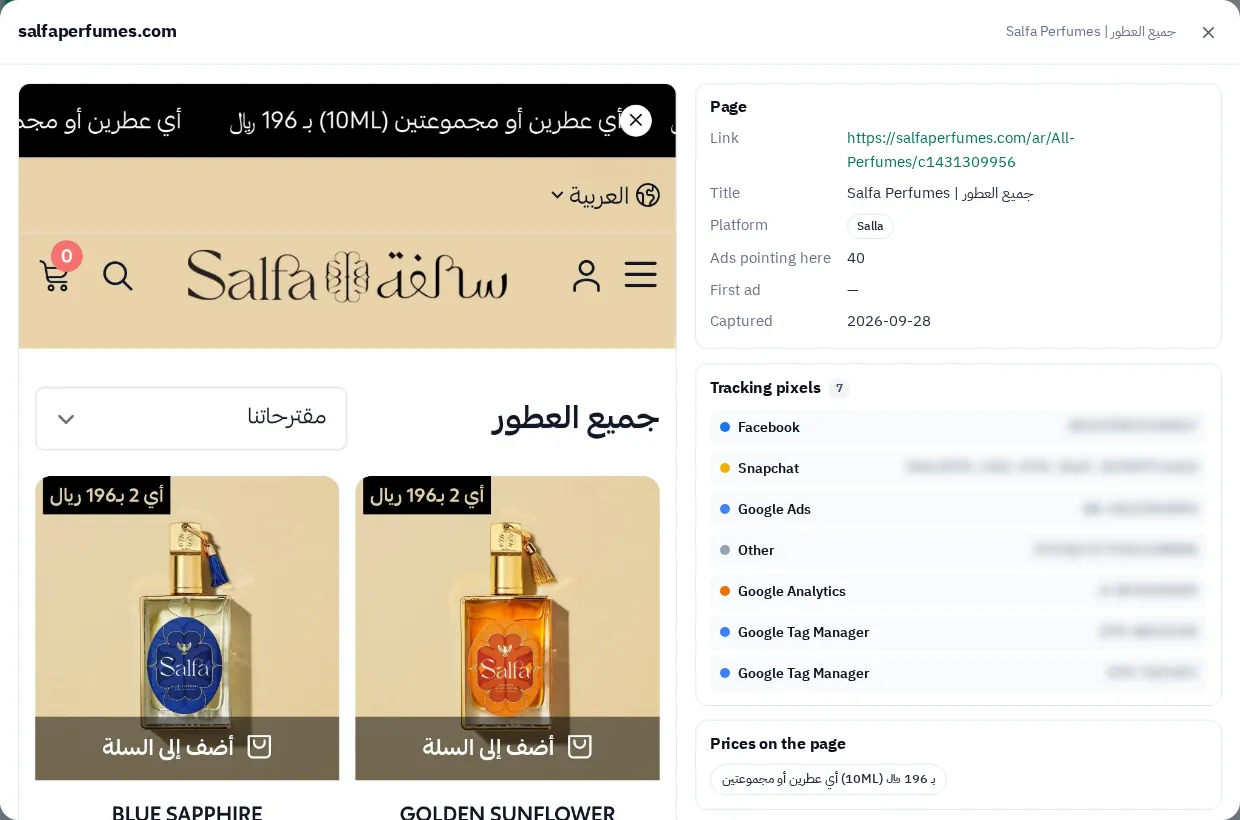
Funnels change a lot: today's price is not next week's, and the whole page may be deleted. So GccFY keeps a snapshot of the landing page behind every ad, with the tracking tools we found on it. From each page, note:
- The price and the quantity offer: one piece, or "2 for…"? The median price in priced LightFunnels ads is SAR 189, and half sit between 100 and 199.
- The payment: cash on delivery, online payment, or both.
- The promise: the result promised, the time frame, the guarantee if any.
- The pixels: Meta, TikTok and Snapchat tell you where else the owner advertises.
Borrow the angle and the offer, never the copy or the design word for word: a cloned page hurts you before it hurts its owner.
The Domains screen: who is expanding, and where
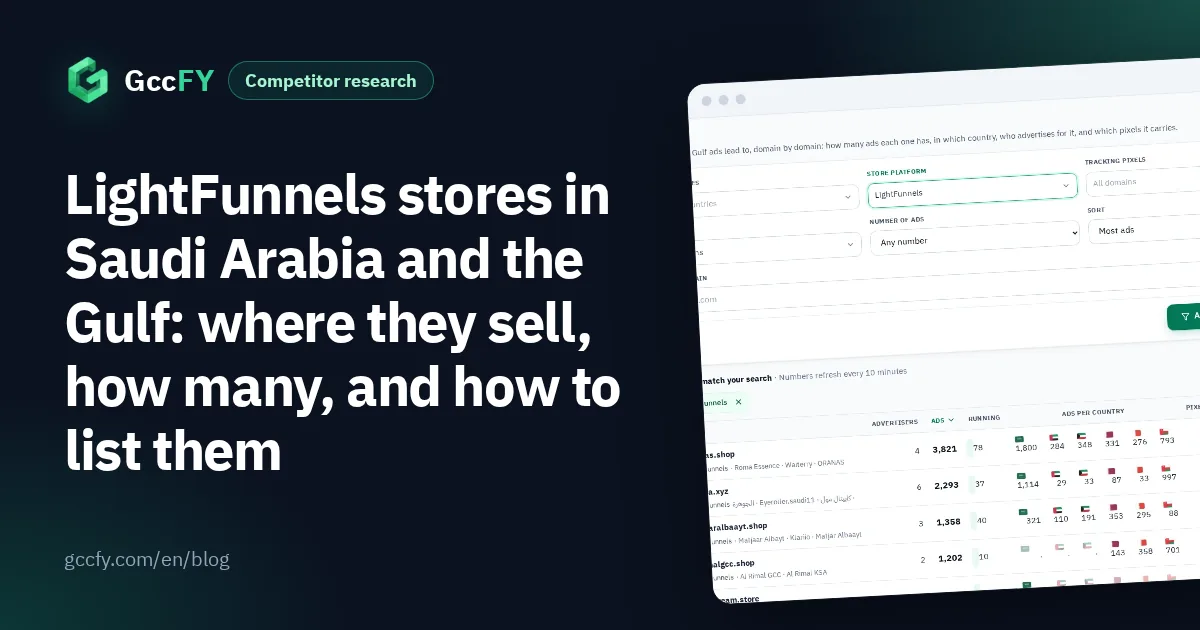
Saudi Arabia takes 49% of LightFunnels ads, then Oman (20%) and Qatar (9%). The Domains screen in GccFY filters by platform: pick LightFunnels and you see every domain with its ads in each of the six countries and the landing pages we captured for it. For the store list itself by country, read LightFunnels stores.
What to watch on each domain:
- A new country: a store that was Saudi only now shows ads in Oman or Kuwait: what it sells worked well enough to move.
- A wave of new ads: dozens of ads for one product within days means the owner is raising the budget on it.
- A new landing page: a new product under test. Follow it for two weeks before you judge it.
What nobody can see, and what is enough
Neither GccFY nor any other tool sees a LightFunnels funnel's sales, order count, conversion rate or profit: that data is private, inside the store owner's account. Anyone promising it is guessing. What you can honestly see is what the advertiser spends in public: how many ads, since when, in which country and with which offer.
That is enough for a good decision: a product with three or more advertisers, ads running for weeks and expansion into new countries is a product with demand. For the products that repeat on LightFunnels right now, read LightFunnels winning products.