In this article
Key takeaways
- The Meta library and the Facebook library are two names for one library: every ad active now on Facebook, Instagram, Messenger, the Audience Network and Meta's other apps.
- For the six Gulf countries it shows active commercial ads only: copy, media, start date, platforms and link, with no budget and no sales.
- The interface works in Arabic (where it is called «مكتبة الإعلانات») from the language switch at the bottom of the page; the ad text itself appears in the advertiser's language.
- In GccFY, between 2026-10-25 and 2026-11-06, the newest 160,000 Arabic ads of Gulf stores came in, and they stay saved after they stop.
The names: Meta, Facebook, Instagram
When the Facebook company renamed itself Meta, the parent company's name no longer matches the Facebook app's. With it, the "Facebook Ad Library" became the "Meta Ad Library". One library, one address, one content:
| The name you hear | What it means |
|---|---|
| Meta Ad Library | The current official name: the ads of every Meta app |
| Facebook Ad Library | The old name of the same library, still the most used |
| Instagram ad library | No separate library: Instagram ads sit inside the Meta library, narrowed with the platform filter (details in Instagram ad library) |
| «مكتبة الإعلانات» | The library's name in its Arabic interface |
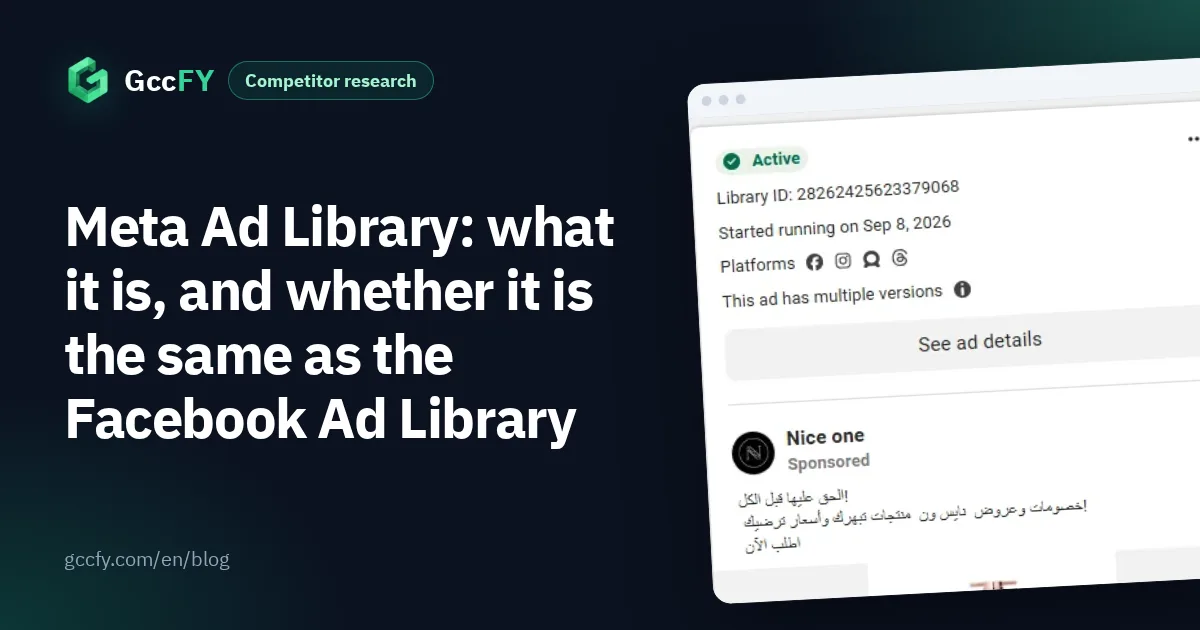
"Meta" in the name covers Facebook, Instagram, Messenger, the Audience Network and Meta's other apps, and the platform filter also lists WhatsApp and Threads. One ad usually runs on several platforms, and you see its platform icons under its start date:
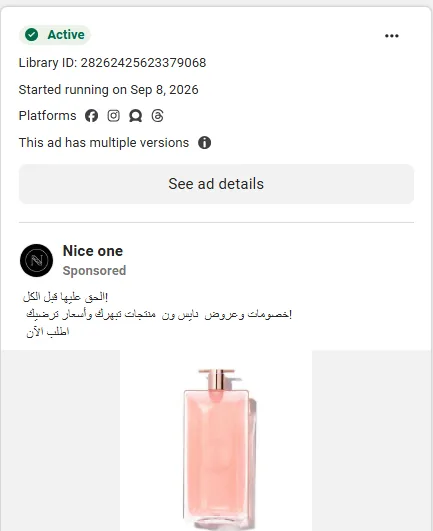
What the library shows for the Gulf countries
Pick the country from the drop-down at the top of the page: Saudi Arabia, the UAE, Kuwait, Qatar, Bahrain or Oman. The library shows the ads delivered in that country, which is why you also see ads in other languages and for other markets: "Saudi Arabia" means the ad was shown there, not that the advertiser is Saudi.
For every commercial ad in the Gulf you see:
- Status and date: "Active" and "Started running on…", sometimes with the total active time.
- Copy and media: the image, video or carousel, and the text as written.
- Platforms: Facebook, Instagram, Messenger or others.
- Button and link: "Shop now" to a store, or "Send WhatsApp message" to a chat.
- About the advertiser: the Facebook and Instagram accounts with their followers, and Page transparency in the About tab.
You search by keyword or Page name and narrow with the filters: language, advertiser, platform, media type, active status and impressions by date. The steps with pictures are in Ad Library step by step.
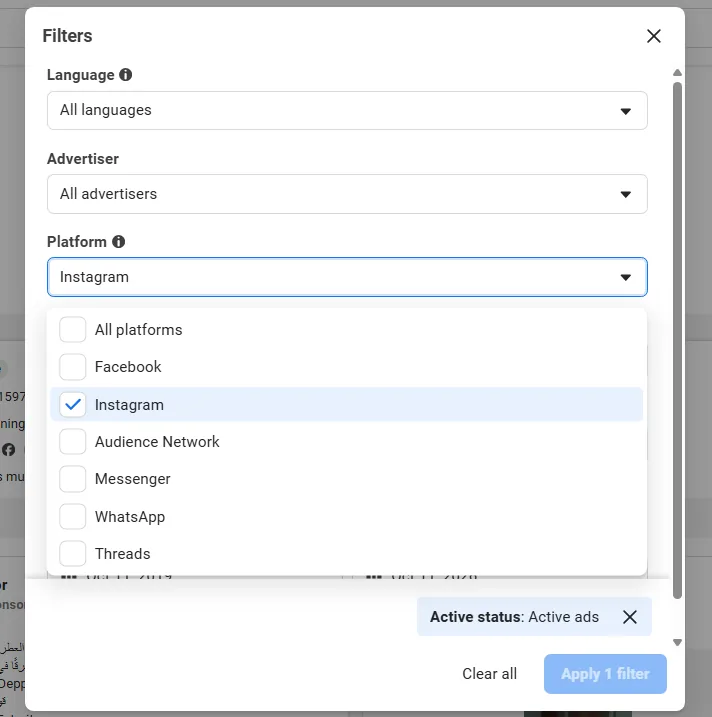
The Arabic interface and the language of the ads
The library works in Arabic: at the bottom of its page there is a switch for the interface language, and once you choose Arabic the library is called «مكتبة الإعلانات» and its buttons and filters turn Arabic. The ad texts themselves always appear in the advertiser's language: a Saudi store's ad shows in Arabic on the English interface, and a global brand's ad shows in English on the Arabic one.
That is why the interface language does not change the results. What changes them is what you type: keyword search matches the ad text as written, so type the Arabic word in the spelling sellers use («عباية» and «عبايه» give different results). The language filter follows Meta's detection of the ad's language, which is not always right for copy that mixes Arabic and English. Details in Ad Library in English and Arabic.
The limits of the Meta library you should know
The library is a transparency tool the company launched so anyone can see who advertises and what, not a market research tool. What it keeps depends on the kind of ad:
- Commercial ads (stores, products, services): visible while active, then gone once the advertiser stops them. This is the case for Gulf ads.
- Ads about social issues, elections or politics: kept for seven years with spend ranges, reach and who paid.
- Ads delivered in the European Union: kept for one year after their last impression, with extra information.
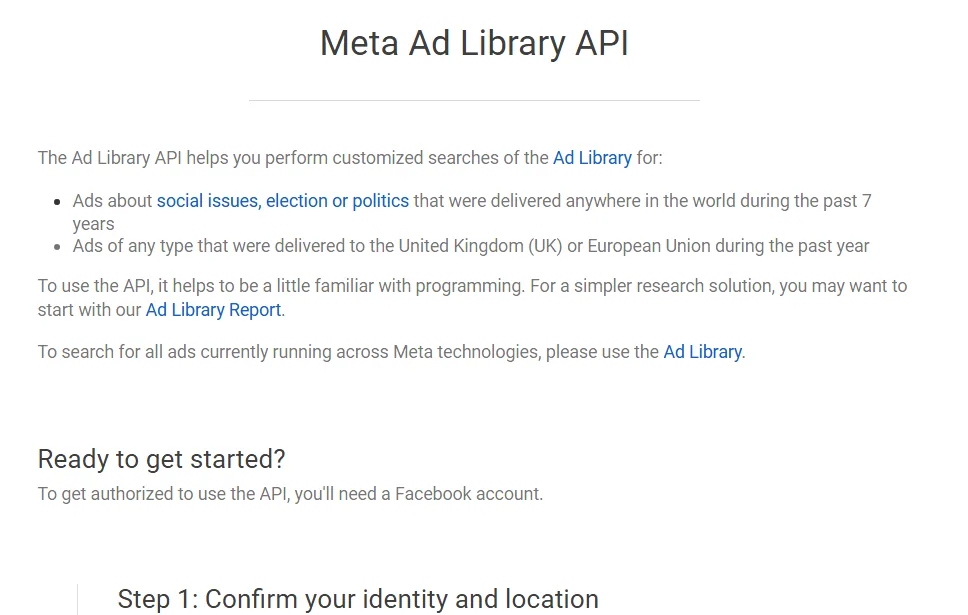
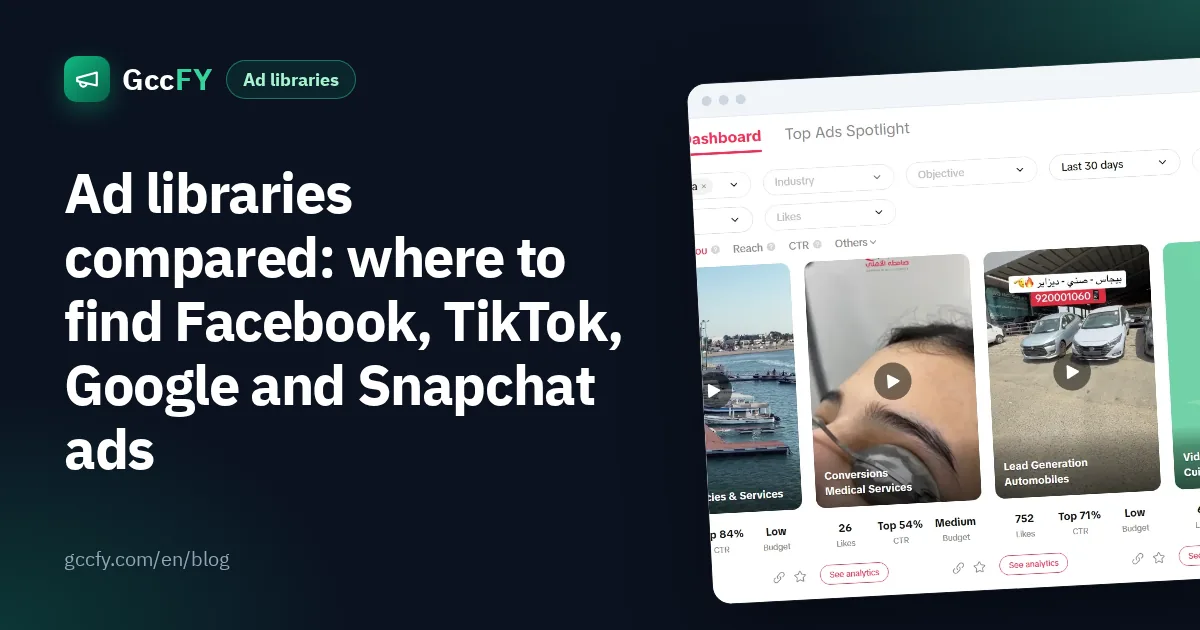
So, for a Gulf seller: no budget or sales for a commercial ad, no sort by running time, no filter for the store platform (Salla, Zid, Shopify), no saved copy of the landing page, and no ads count for a website (the counter is per Page, and approximate). The other platforms' libraries differ: Google's Transparency Center shows Gulf ads, while TikTok's and Snapchat's libraries do not show their Gulf commercial ads. The comparison is in Ad libraries compared.
What GccFY adds on top of the Meta library for Gulf stores
GccFY is an Arabic ads library built on the same public data Meta publishes; it collects the ads of stores selling in the six Gulf countries and keeps them after they stop, with the store page behind every ad. Between 2026-10-25 and 2026-11-06 the newest 160,000 Arabic ads came in from 24,775 advertiser Pages: 35% of them were shown in Saudi Arabia and 26% in the UAE, 69% are video, and 26% carry a WhatsApp message button. The whole library holds 1,290,000+ ads.
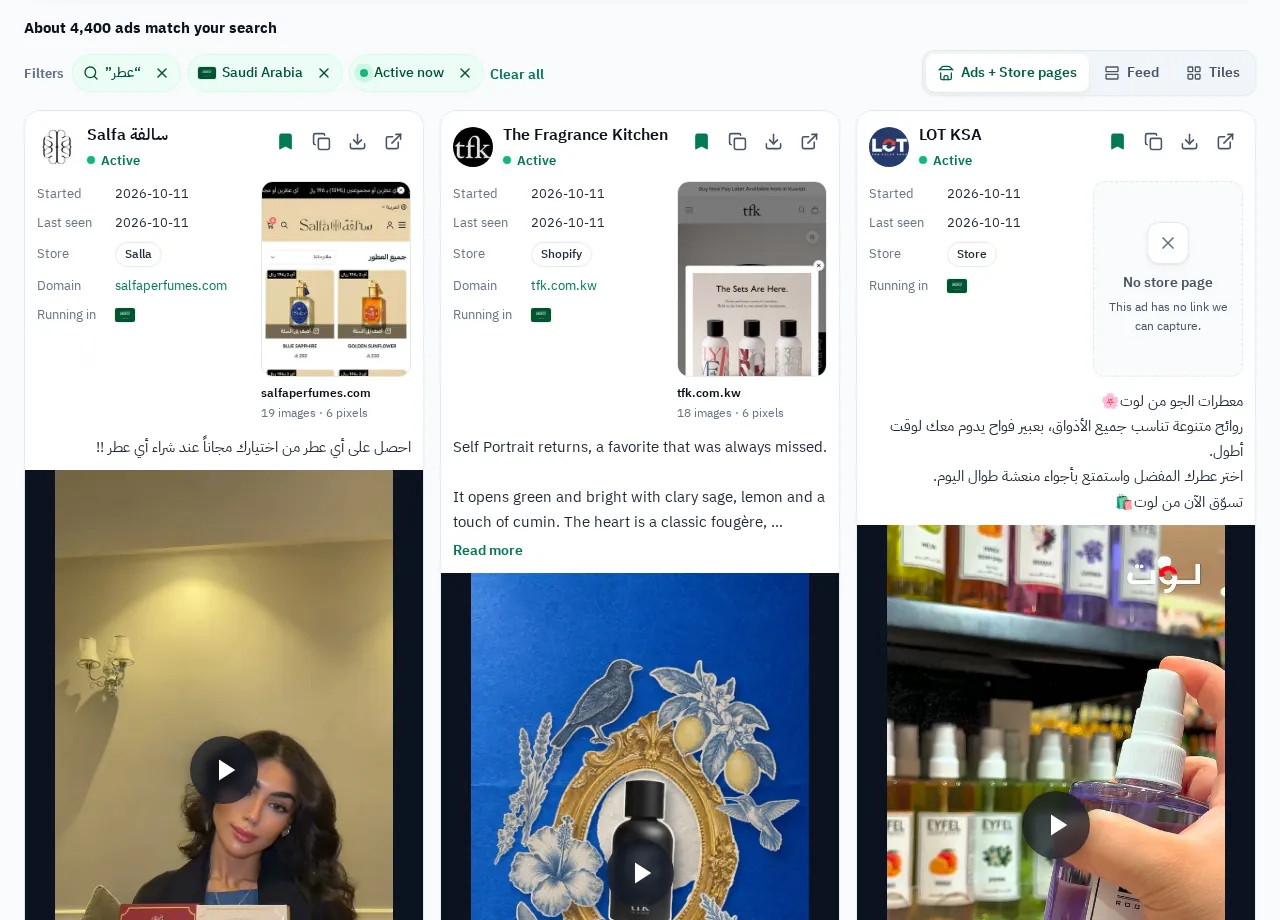
- Sort by "longest running", a store platform filter and a WhatsApp ads filter.
- Stopped ads stay saved, so you see what a competitor tested last month.
- Every advertiser and every store domain with its total ads and what runs now, per country.
- An AI helper that answers your questions on the library's data (read The AI helper).
GccFY is not affiliated with Meta and does not replace its library: every card in it opens the ad in Meta's own library.