In this article
Key takeaways
- Cash on delivery in 17% of Gulf ads, instalments (Tabby, Tamara) in only 3%: the first promise is far more common, the second is confined to Saudi Arabia and the UAE.
- By country: from 12% in Saudi Arabia to 27% in Oman; Bahrain (20%) and Qatar (17%) in the upper middle.
- By category: accessories (45%) and electronics (39%) at the top, abayas (12%) and food (13%) at the bottom.
- By platform: YouCan (26%), LightFunnels (24%) and EasyOrders (17%) high; Salla (2%) and Shopify (9%) low.
What the ads promise: cash on delivery and instalments
Of 160,000 ads, 26,704 mention cash on delivery (17%) and 5,277 mention instalments through Tabby, Tamara or the like (3%). What the numbers do not say: an ad that does not mention cash on delivery may still accept it in the store without advertising it; the reverse is rare. We count what the seller chooses to put in the ad text, that is, what they see as a selling argument. And the decision in this article is exactly that: whether the promise of cash on delivery is an argument in your market and category, or not.
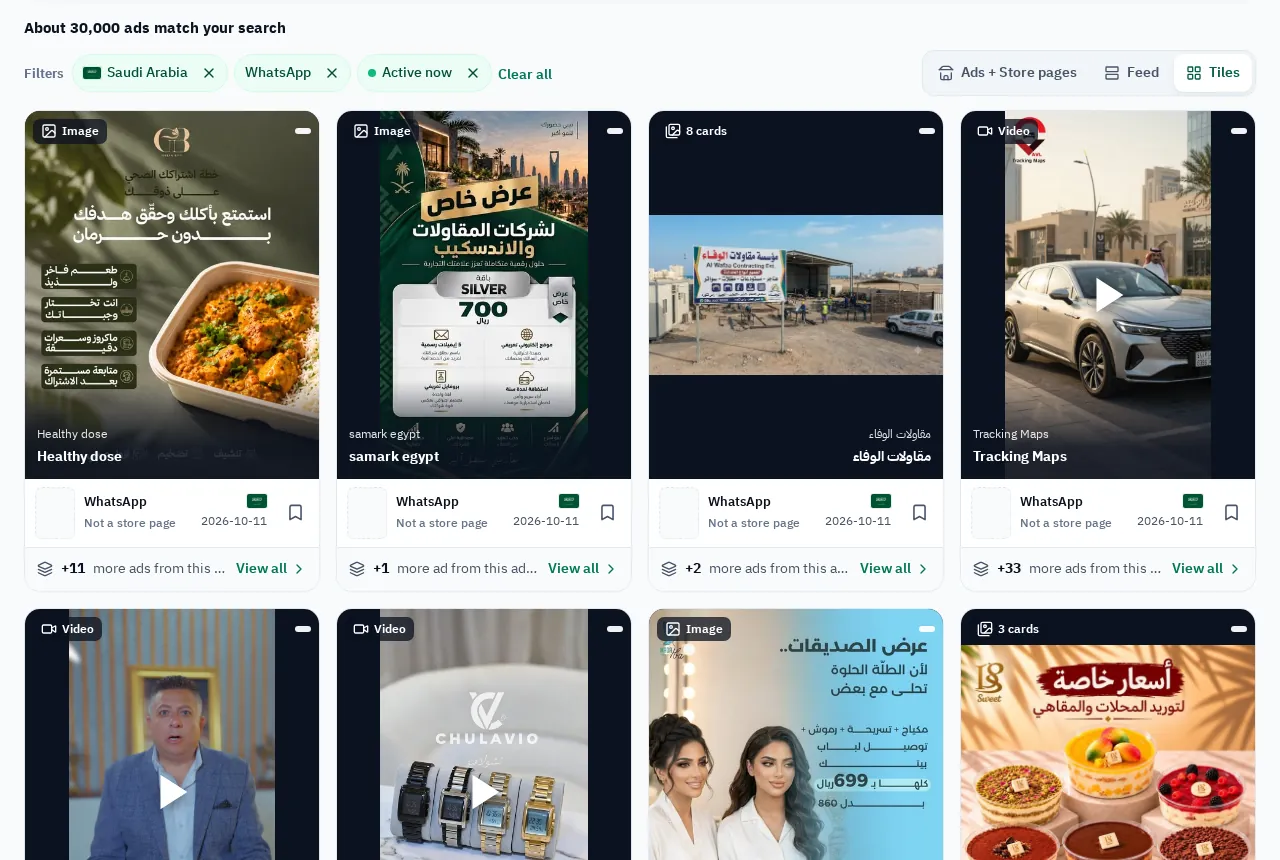
By country: from Saudi Arabia to Oman
| Country | Cash on delivery in the ad | Instalments (Tabby, Tamara) | Free delivery |
|---|---|---|---|
| Saudi Arabia | 12% | 5% | 11% |
| UAE | 15% | 4% | 12% |
| Kuwait | 14% | 1% | 13% |
| Qatar | 17% | 2% | 14% |
| Bahrain | 20% | 1% | 18% |
| Oman | 27% | 1% | 18% |
Cash on delivery roughly doubles from Saudi Arabia to Oman. The Saudi market is the biggest and the most used to online payment and store platforms, so it is mentioned least there; in Oman, Bahrain and Qatar the seller puts it in the text because the buyer expects it. Instalments are the mirror image: 5% in Saudi Arabia and 4% in the UAE, nearly absent in the other four. So if you sell goods worth hundreds of riyals in Saudi Arabia and the UAE, instalments are a rarer argument than the discount and closer to the card than to cash on delivery.
Oman in detail: cash on delivery, discounts and urgency are all higher than in the rest of the Gulf, so the Omani ad carries all three offers in long copy. The full Gulf picture is in Ad offers in numbers.
By category: where the buyer doubts
| Category | Cash on delivery | Instalments |
|---|---|---|
| Accessories and watches | 45% | 2% |
| Electronics | 39% | 4% |
| Health and supplements | 29% | 2% |
| Fashion | 28% | 1% |
| Hair care | 25% | 2% |
| Makeup | 25% | <1% |
| Skincare | 23% | 3% |
| Home | 17% | 3% |
| Kids | 17% | 2% |
| Perfume | 15% | 2% |
| Food | 13% | 3% |
| Abayas | 12% | 9% |
The rule is clear: cash on delivery jumps where the buyer doubts the quality or the seller (accessories, devices and supplements with no known brand), and drops where the brand or the picture sells (abayas, perfume, food). Instalments peak in abayas (9%), a Saudi product at a price worth splitting into four payments, and in electronics (4%).
By store platform: the biggest difference
Here the difference is clearer than by country and category combined. The share of each platform's ads that mention cash on delivery, where we knew the platform the ad leads to:
| Platform | Ads | Pages | Cash on delivery | Free delivery |
|---|---|---|---|---|
| YouCan | 1,722 | 182 | 26% | 27% |
| LightFunnels | 3,553 | 149 | 24% | 11% |
| EasyOrders | 2,070 | 185 | 17% | 29% |
| WooCommerce | 2,092 | 371 | 10% | 7% |
| Shopify | 15,532 | 1,959 | 9% | 15% |
| Salla | 13,340 | 1,966 | 2% | 10% |
| WhatsApp without a store | 44,022 | 13,486 | 2% | 3% |
| Zid | 1,974 | 299 | <1% | 7% |
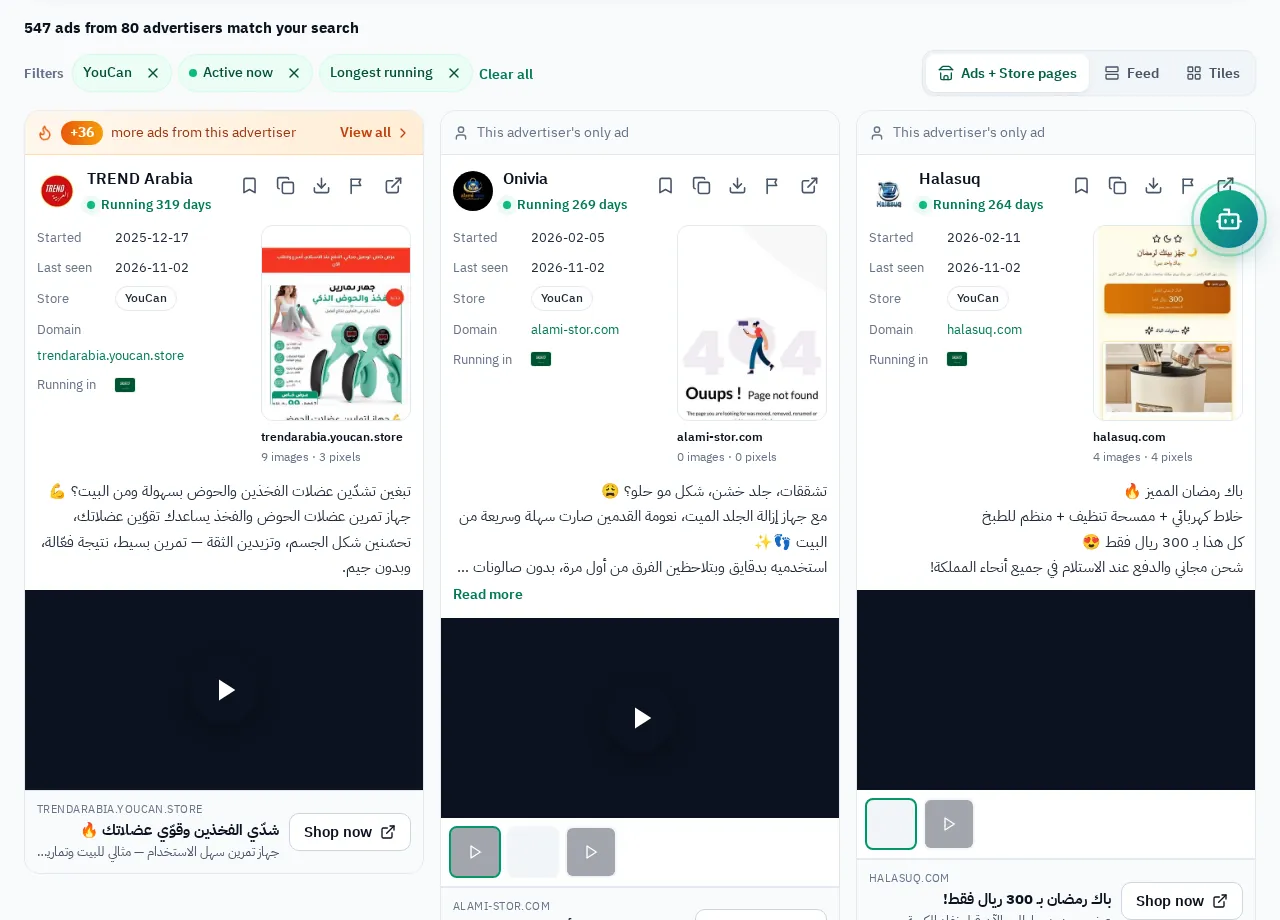
The single-product-page and dropshipping platforms (YouCan, LightFunnels, EasyOrders) sell with cash on delivery in the ad itself: few pages with many ads each, and the promise in the first line. The Saudi and Gulf stores on Salla, Zid and Shopify sell by card and instalments (Salla 6% and Shopify 4% instalments), and rarely mention cash on delivery in the ad even if the store accepts it. The WhatsApp seller mentions it in only 2%, because payment is agreed in the chat, not in the ad. Details on YouCan in YouCan and cash on delivery, and on the differences between platforms in Salla, Zid and Shopify.
When to write cash on delivery in the ad
Write it when it is a selling argument, not just an option in the store:
- In Oman, Bahrain and Qatar for almost any category: the buyer expects it, and its absence is an open question.
- In accessories, electronics and supplements in every country: paying later answers "and if it is not original?" before it is asked.
- For a new store with no known brand: the promise stands in for the trust not yet built.
- With a single-product page and the "Order now" button: the promise and the button say the same thing (Best CTA button).
And leave it out, or keep it to the last line:
- For known brands, perfume, abayas and food in Saudi Arabia and the UAE: the market there mentions discounts and instalments, and cash on delivery adds no argument.
- For goods above a few hundred riyals in Saudi Arabia and the UAE: instalments through Tabby or Tamara are a rarer argument (3% of ads) and closer to the card buyer.
- If you do not actually accept it in every city of the country: a promise you break on half the orders is worse than no promise.
The rule in both cases: test. The same ad twice, once with "cash on delivery" in the first line and once with a discount or "split it into 4", a week each, and compare the cost per order. What we cannot tell you from the ads: the share of orders refused at the door and the cost of collection; those are your own numbers.
Templates: cash on delivery, card and instalments
In our own wording, with an English gloss; each case has its own first line:
| Case | Copy (ours) |
|---|---|
| Cash on delivery (Oman, Qatar, Bahrain) | «ادفع لما يوصلك: [المنتج] بـ [السعر]، والدفع عند الاستلام في كل [الدولة]. التوصيل خلال [المدة].» (Pay when it arrives: [product] at [price], cash on delivery across [country]; delivery within [time].) |
| Cash on delivery (electronics, accessories) | «شوفه بيدك قبل ما تدفع. [المنتج] أصلي بضمان [المدة]، والدفع عند الاستلام.» (See it in your hands before you pay. Original [product] with a [period] warranty, cash on delivery.) |
| Card and discount (Salla, Shopify) | «[المنتج] بـ [السعر] بدل [السعر] لين [اليوم]. ادفع بالبطاقة أو [الوسيلة] وتوصيل مجاني فوق [المبلغ].» ([Product] at [price] instead of [price] until [day]; pay by card or [method], free delivery above [amount].) |
| Instalments (Saudi Arabia, UAE) | «[المنتج] بـ [السعر]، أو قسّمها على 4 دفعات بدون فوائد مع [تابي أو تمارا].» ([Product] at [price], or split it into 4 interest-free payments with [Tabby or Tamara].) |
| Both (the last line) | «[المنتج] بـ [السعر]. ادفع بالبطاقة، أو عند الاستلام داخل [المدينة].» ([Product] at [price]. Pay by card, or on delivery inside [city].) |
The full set of hooks is in Arabic ad hooks, and the ad structure in Arabic ad copy. In GccFY, search ad copy for «الدفع عند الاستلام» (cash on delivery) with your country and category, and sort by longest running: what lasted tells you whether the promise sells in your market.