In this article
Key takeaways
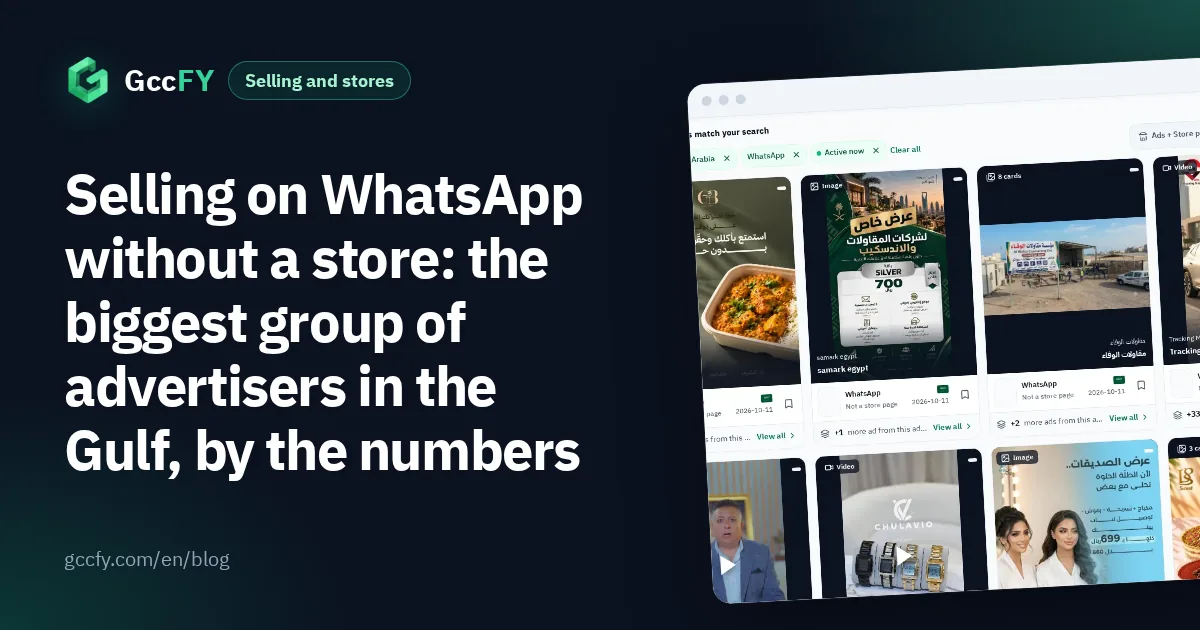
- 27% of the newest Arabic ads lead to WhatsApp rather than a store, from 13,633 advertiser pages: the biggest group of advertisers in the Gulf.
- The UAE sells over WhatsApp most: 32% of its ads, against 24% in Saudi Arabia, where Salla takes 20%.
- WhatsApp prices spread wider than stores': the median is SAR 220, and the upper quartile starts at SAR 649.
- The limits are clear: no payment page, no pixel counting purchases, and every order needs someone to answer.
The biggest group of advertisers in the Gulf
Of all the ads whose destination we identified, WhatsApp comes first: 43,953 ads, or 27% of the newest 160,000 Arabic ads. The number of advertisers matters more: 13,633 pages sell over WhatsApp, against 1,936 pages leading to Shopify and 1,909 to Salla. Many pages, each with few ads: this is the model of the small seller and the beginning, not of the big store testing dozens of products.
For the whole platform map, read Salla, Zid and Shopify.
Where people sell over WhatsApp
The UAE and Saudi Arabia are close in the number of WhatsApp ads (30% and 30%), but the weight inside each market differs: in the UAE 32% of all ads lead to WhatsApp, in Oman 29%, and in Saudi Arabia only 24%, because Salla takes 20% of its ads. The Saudi market buys from stores more; the Emirati market messages more.
What they sell over WhatsApp, and how
Home and furniture first (9%), then skincare and health: products the buyer asks about before deciding (size, colour, how to use it). And the WhatsApp group is not only products: it also holds services and bookings, such as 444 ads with a travel "Book now" button.
The ads look different from store ads: a single image in 30% of WhatsApp ads against 18% of Salla ads, and longer copy (a median of 56 words against 24 for Salla), because the ad explains what a store page would. WhatsApp is named in the copy itself in 31%. Cash on delivery is written in only 2%: it is agreed in the chat.
WhatsApp vs Salla and Shopify
| WhatsApp, no store | Salla | Shopify | |
|---|---|---|---|
| Ads | 43,953 | 12,673 | 15,051 |
| Advertiser pages | 13,633 | 1,909 | 1,936 |
| Video | 57% | 59% | 56% |
| Single image | 30% | 18% | 17% |
| Discount or offer | 27% | 30% | 32% |
| Free delivery | 3% | 9% | 14% |
| Median price (SAR) | 220 | 199 | 199 |
| Upper price quartile (SAR) | 649 | 299 | 300 |
| Median copy length (words) | 56 | 24 | 39 |
The WhatsApp price range is much wider: SAR 75 to 649 for the middle half, against 99 to 299 on Salla. A chat sells both the cheap item and the expensive one that needs persuasion or made-to-order detail. For the offers across all categories: Ad offers in numbers.
When selling over WhatsApp makes sense, and its limits
WhatsApp suits you when:
- You start with one or two products and do not want to pay for a store and a payment gateway before you know the product sells.
- Your product needs a question: size, colour, tailoring, or a service booked by appointment.
- You sell in one city or one country, deliver yourself or by courier, and take cash on delivery.
Its limits:
- No payment page: payment is a transfer, a link you send by hand, or cash at the door, and every manual step loses some buyers.
- No pixel: the ad never passes through a store page, so Ads Manager counts conversations, not purchases, and you cannot retarget people who added to cart and did not buy.
- Every order needs a person: a chat left waiting for hours goes cold.
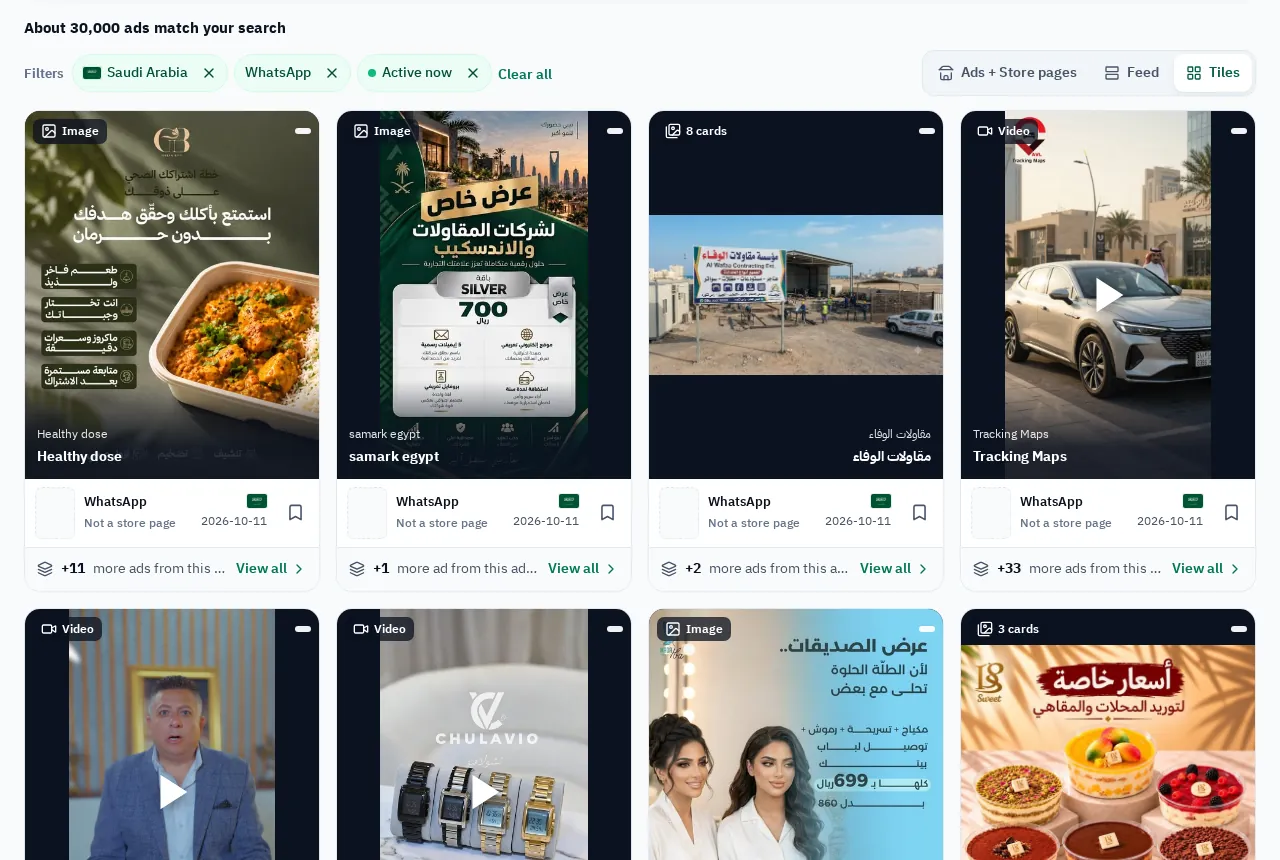
How click-to-WhatsApp ads work and how to set them up: WhatsApp ads.
When to move to a store
- When you cannot keep up with replies: if chats outgrow what you can answer within minutes, a store sells while you sleep.
- When you want to grow with ads: the pixel on a store page teaches Meta who buys; read which pixels to install on Salla, Zid and Shopify.
- When the same products repeat: a fixed catalogue at fixed prices belongs in a store, not in messages.
Many advertisers do not choose: a store ad and a WhatsApp ad for the same product, with WhatsApp kept for questions and after-sales. For Salla and Zid store ads, read Salla and Zid store ads.