
In this article
Key takeaways
- Weeks of shipping from China do not suit Gulf buyers; the model that works is usually local stock or a fulfilment warehouse inside the Gulf.
- Selling legally in Saudi Arabia needs a commercial registration or a freelance document, and store authentication on the Business Platform (which replaced Maroof in 2023).
- Choose products from ads: long running times and several advertisers are signals of demand.
- Budget for refused cash-on-delivery orders: cash on delivery is mentioned in 11% of Arabic ads in our study.
What dropshipping is, and how it works in the Gulf
In classic dropshipping you list a product in your store, and when a customer orders it you pass the order to the supplier, who ships directly. No stock, no warehouse. The model spread worldwide with shipping from China, but in the Gulf it runs into three things:
- Expectations: Gulf buyers are used to delivery in one to three days.
- Cash on delivery: many buyers will not pay upfront to a store they do not know.
- Trust: a locally authenticated store with a WhatsApp number and quick replies sells more.
So a hybrid model grew in the Gulf: the seller tests a product with ads, then places a small quantity in a local fulfilment warehouse whose partner handles delivery and cash collection.
The dropshipping models available in Saudi Arabia
| Model | How it works | Pros | Cons |
|---|---|---|---|
| International dropshipping | The supplier ships from abroad straight to the customer | No stock, low start-up cost | Slow delivery, usually prepaid, less trust |
| Local warehouse (fulfilment) | Stock in a Gulf warehouse; a partner ships and collects | Fast delivery, cash on delivery | Needs capital for stock |
| Local supplier | A Saudi wholesaler ships on your behalf | Fast, no stock | Lower margin, widely sold products |
| Selling by chat | A WhatsApp ad; the order is confirmed in the chat | Start without a store | Someone must answer every order |
Legal requirements in Saudi Arabia
This is an overview, not legal advice, and requirements change, so check the official sources:
- Commercial registration or freelance document: to sell online legally, with an activity matching what you sell. The freelance document is available to Saudi nationals.
- E-store authentication: moved in 2023 from the Maroof platform to the Business Platform (Saudi Business Center), and requires a valid commercial registration or freelance document.
- VAT: 15%, with mandatory registration once taxable sales exceed SAR 375,000 a year.
- The E-Commerce Law: requires you to disclose your name, contact details and terms of sale and return clearly.
- Product rules: cosmetics, supplements and food often need registration with the Saudi Food and Drug Authority, and some products need conformity certificates.
If you are not Saudi, or you sell from outside the Kingdom, the requirements differ: talk to a specialist before you start.
Pick the product from ads, not guesses
The biggest reason dropshipping fails is a product nobody wants. Instead of "top 100 products" lists, read the market itself:
- Search your category's ads in Saudi Arabia and sort them by running time.
- Count the advertisers on the product: three or more signals demand.
- Open the landing pages: price, bundles, cash on delivery.
- Check the margin, as in Winning products.
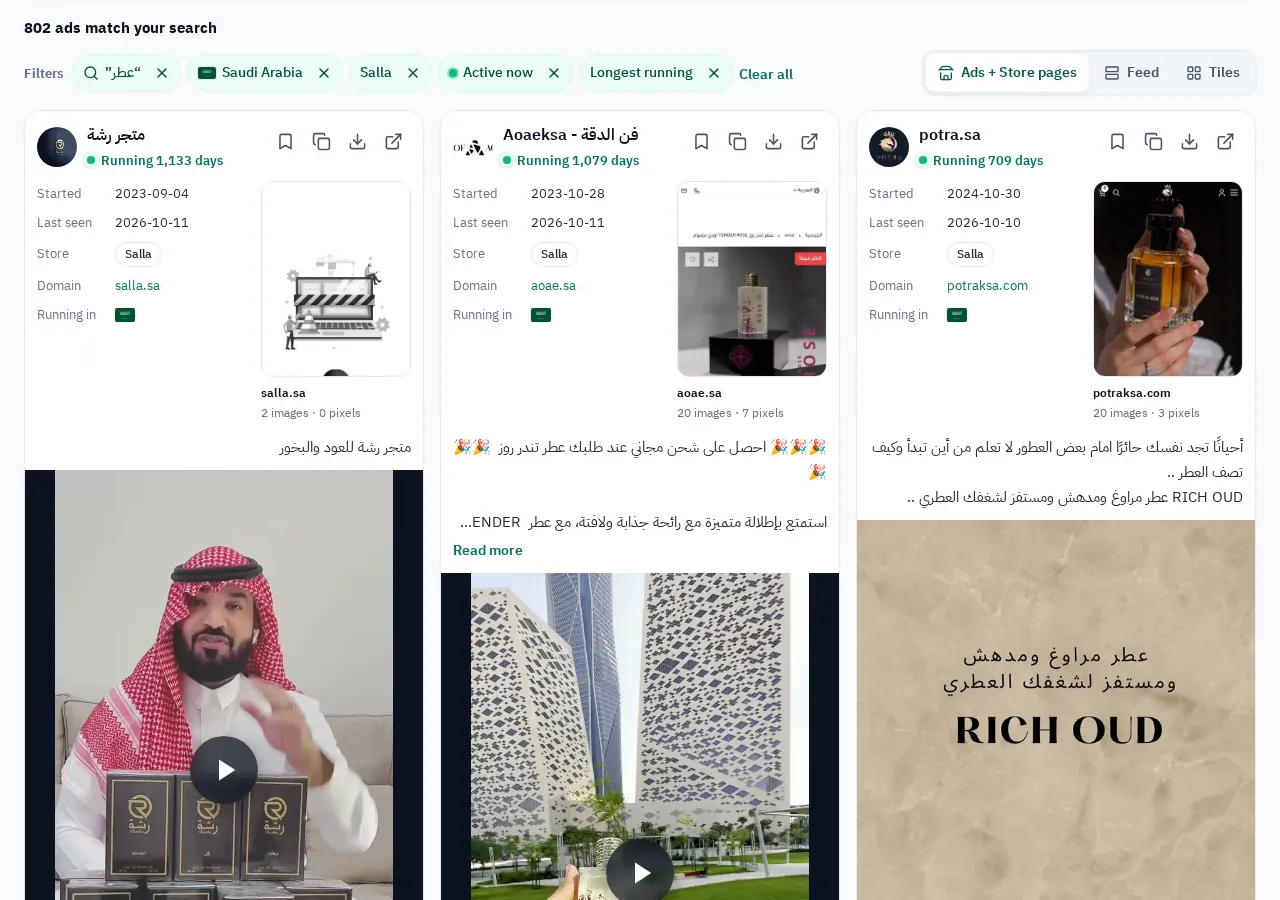
For the categories advertised most right now, read Best sellers in Saudi Arabia.
Store, payment and delivery
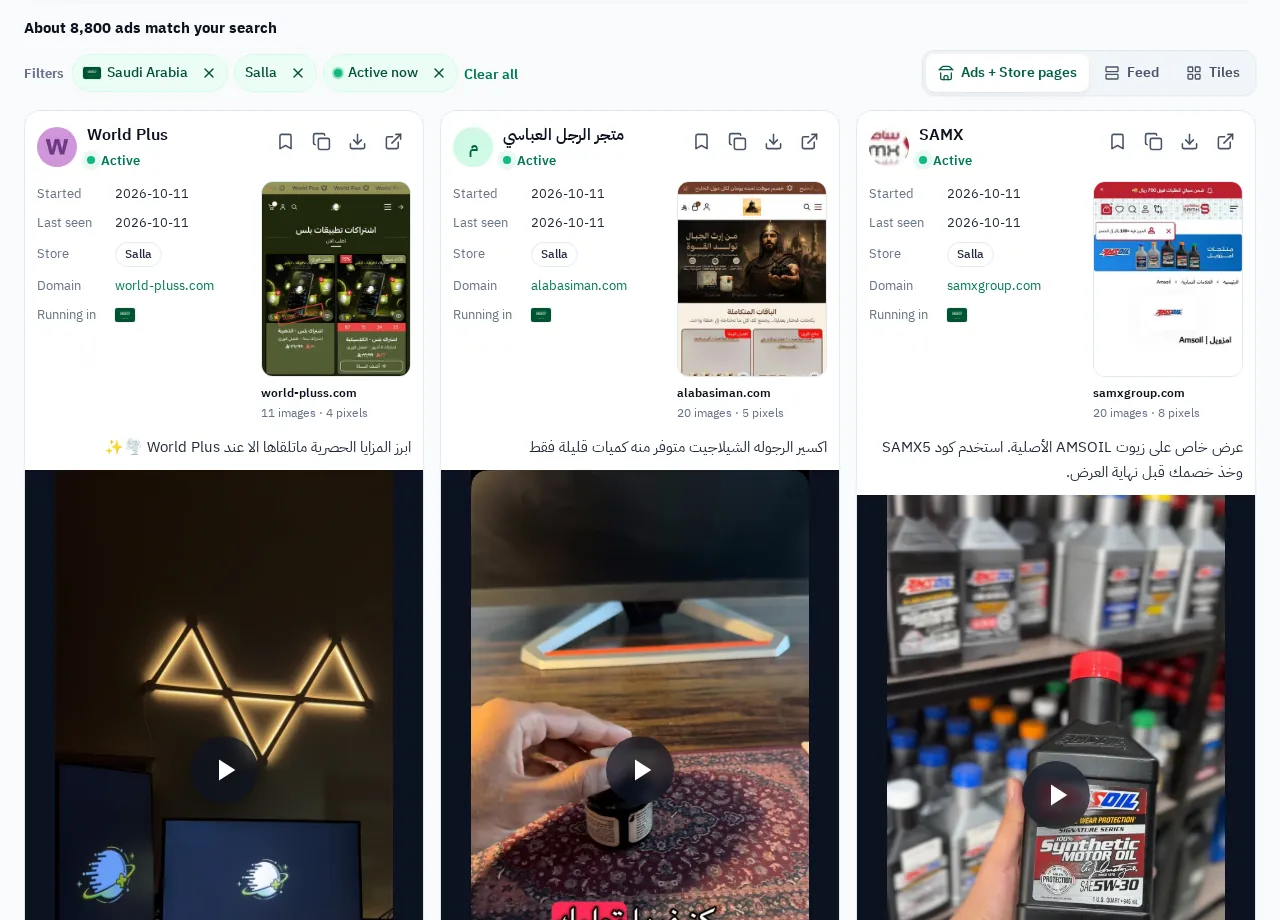
- Store: Salla and Zid suit sellers inside Saudi Arabia, Shopify suits sellers in several countries. Details in Salla and Zid store ads.
- Payment: mada, Apple Pay, pay-later with Tabby and Tamara, and cash on delivery.
- Delivery: local couriers and fulfilment companies offer cash collection; compare prices and delivery success rates.
- WhatsApp: a number for questions and order confirmation reduces refused deliveries.
Ads: how successful sellers advertise
- A real product video: video makes up 65% of the newest Arabic ads in our library.
- Clear Arabic copy: offer, price and payment method in the first two lines. Read Arabic ad copy.
- The right button: "Shop now" for clear products, "Send WhatsApp message" for products that need a question.
- Fast testing: several ads on small budgets, then stop the weak and scale the strong.
Beginner mistakes
- Long shipping without warning: a customer waiting three weeks without notice asks for a refund.
- Ignoring refused deliveries: each refused order costs you shipping both ways.
- Copying a competitor's ad: the material belongs to its owner, and a copied ad does not set you apart.
- Selling without authentication: an unauthenticated store loses buyers' trust and risks penalties.
- Ignoring product rules: an unregistered cosmetic can be held at customs or recalled.