In this article
Key takeaways
- Skincare, kids and toys, home and kitchen, and perfumes are among the most advertised categories in Saudi Arabia and the Gulf.
- Many ads mean big demand and big competition at once: look inside a category for a specific product with a different offer.
- Abayas sell a lot through Salla stores, skincare a lot through WhatsApp: the sales channel is part of the product.
- An ad is not a confirmed sale; combine the ad signal with the bestseller lists of large marketplaces.
Why read sales from ads?
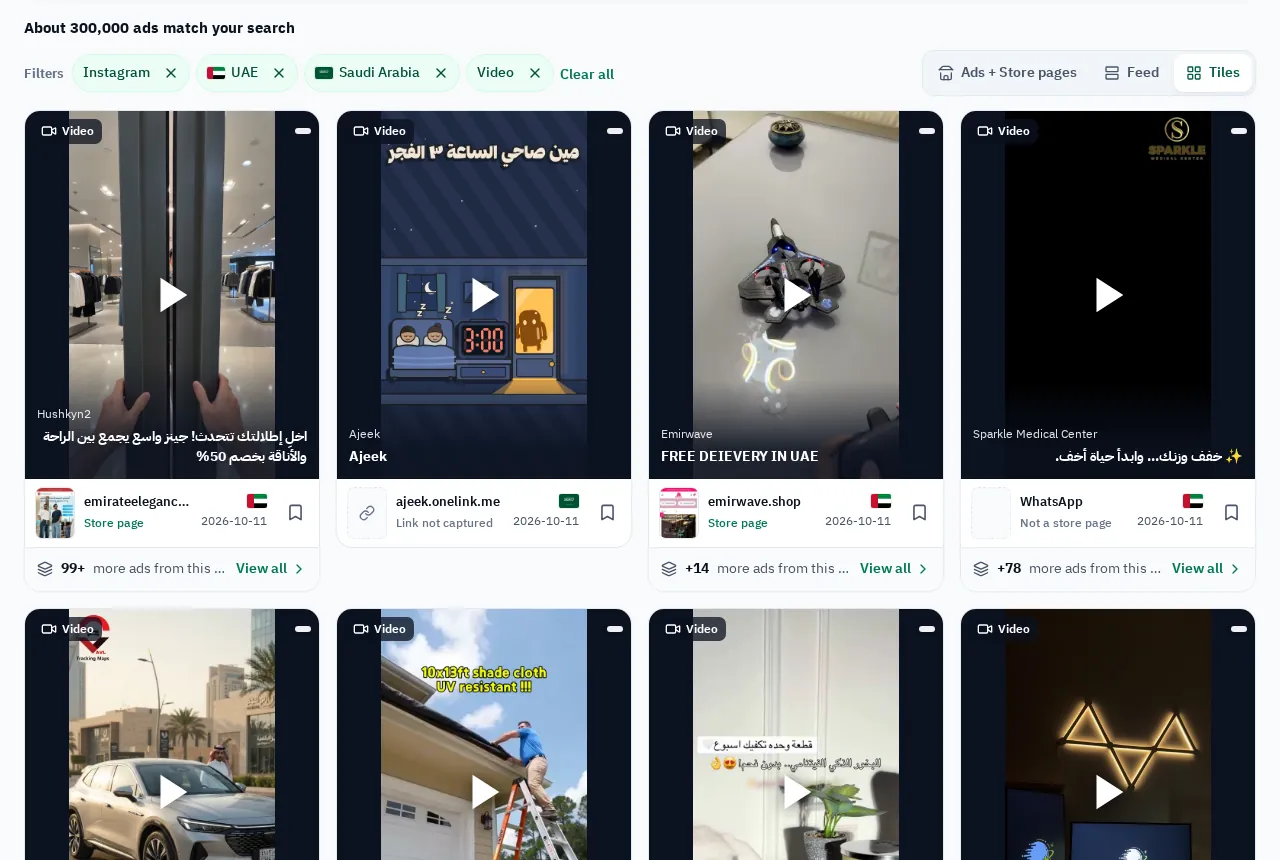
Stores do not publish their sales, and the lists you find online are often generic and recycled from previous years. Ads reflect real spending decisions: advertisers pay every day and stop an ad that does not sell within days. When hundreds of active ads target one category, someone is selling in it.
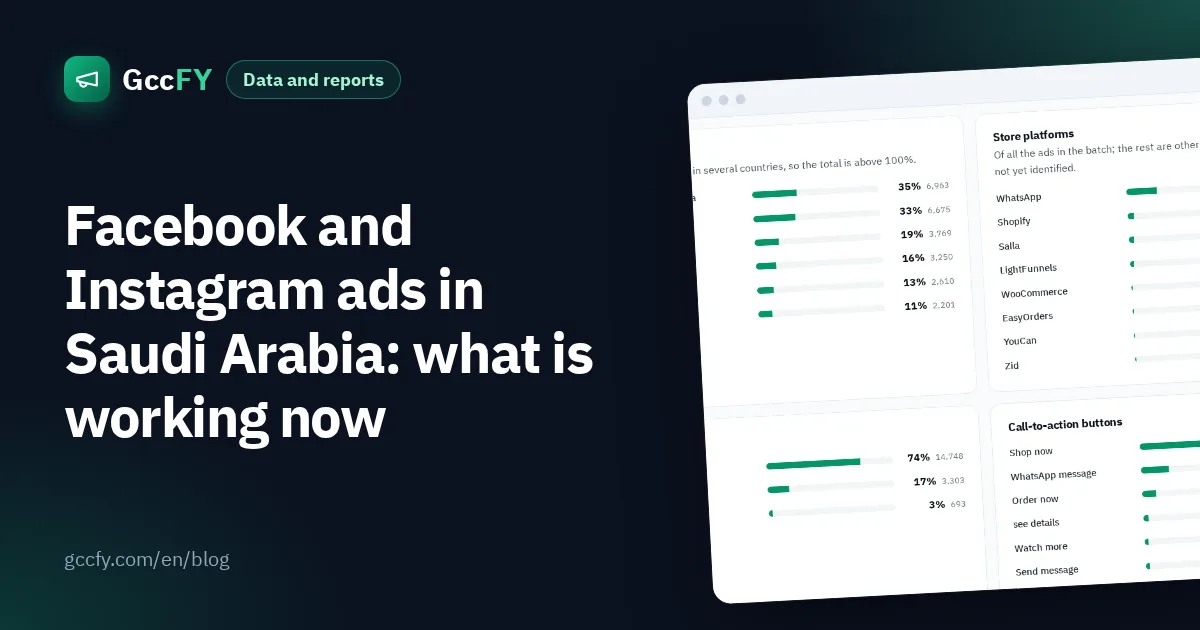
The numbers here come from the newest 20,000 Arabic ads in the GccFY library, from stores selling in the six Gulf countries. Each ad is matched to categories by the words in its copy, and one ad can fall into more than one category.
An honest note: an ad is a signal of demand, not a sales figure. A category with many ads can also be crowded with competitors.
The most advertised categories in Saudi Arabia right now
And the same ranking across the whole Gulf:
What sells inside each category
Skincare and makeup
Serums, sunscreens, moisturising and brightening creams, and at-home care tools. Most ads are videos showing results on skin, and many sell through WhatsApp. Skincare ads.
Kids and toys
Educational toys, baby essentials and active play. Peaks before back-to-school and Eid. Kids and toys ads.
Home and kitchen
Organisers, cookware sets, bedding and curtains, smart kitchen tools. "Before and after" videos are the most common style. Home and kitchen ads.
Perfumes and bakhoor
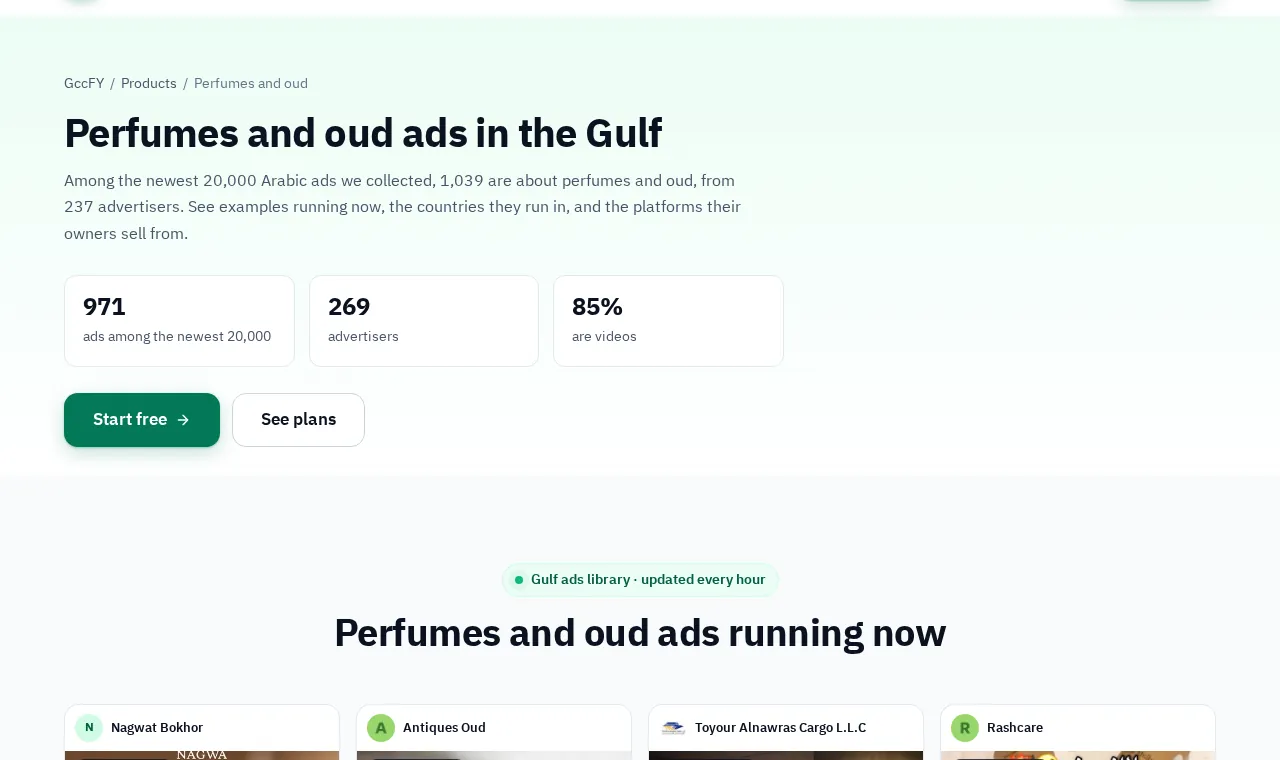
Oud oil (dahn al oud), bakhoor, mukhamaria and oriental fragrances. A truly Gulf category; since scent cannot come through a screen, its ads sell the packaging, the offer and the gift more than the description. Perfume ads.
Watches and accessories
Men's and women's watches, sunglasses and rings. Many are gifts, so they peak before Eid. Watches and accessories ads.
Supplements and health
Collagen, vitamins and slimming products. Mind the rules: many need registration with the Saudi Food and Drug Authority before they can be sold. Supplement ads.
Abayas and modest fashion
Everyday and formal abayas, jalabiyas and prayer dresses. Often sold through Salla stores, peaking before Ramadan and Eid. Abaya ads.
Dates, coffee and hospitality
Sukkari dates, Arabic and specialty coffee, honey and nuts. Ramadan and Eid are the season. Dates and coffee ads.
Haircare
Hair oils, anti-hair-loss and thickening products, and styling tools. Haircare ads.
Electronics and accessories
Chargers, earbuds, smartwatches, and phone and car accessories. Peaks on White Friday. Electronics ads.
And in the UAE?
The UAE ranking is close to Saudi Arabia's, with differences worth noting if you sell in both:
Other sources that confirm the signal
Combine the ad signal with other sources before you decide:
- Amazon.sa and Noon bestseller lists: real sales, but for products with prices and competition unlike your store's.
- Google Trends: is search interest in the product rising or falling in Saudi Arabia, and when is its season?
- TikTok Creative Center: the most engaging products and ads by country.
- Store platform reports: Salla and Zid publish reports on buying behaviour in Saudi Arabia.
How to choose your product from these categories
- Pick a category you know or can create genuine content for.
- Look for a specific product inside it, not the whole category: "vitamin C serum", not "skincare".
- Sort that product's ads by running time in Saudi Arabia and count how many advertisers sell it.
- Read the landing pages: price, bundle offers and payment method.
- Check the margin before buying stock, as explained in Winning products.